





Residential - What We Inspect - Submenu
Residential - Understanding the Whole Home
More Than a Checklist.
UNDERSTANDING THE WHOLE HOME

A home is more than its individual components. Its structure, systems, and surrounding conditions all contribute to how it performs.

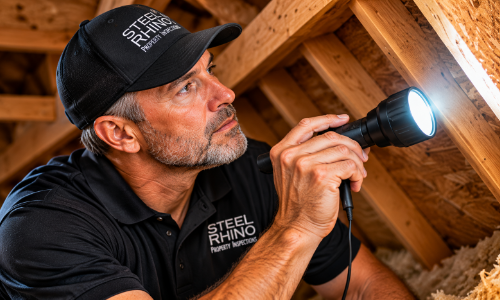
Steel Rhino evaluates readily accessible systems and components, helping you understand their observed condition and identify concerns that may deserve attention.

But identifying a concern is only part of the process. We take the time to explain what we find, why it matters, and what may warrant further attention — giving you a clearer understanding of the home as a whole.

Residential - Eight Areas
EIGHT AREAS OF YOUR HOME
01
Structure & Foundation

Visible structural components, foundation conditions, and signs of movement or deterioration.

02
Exterior & Site

Siding, grading, drainage, walkways, decks, and other accessible exterior features.

03
Roof & Attic

Roof coverings, accessible attic spaces, insulation, ventilation, and visible signs of moisture or damage.

04
Plumbing Systems

Visible supply and drain components, fixtures, water heating equipment, and signs of leakage.

05
Heating & Cooling

Accessible heating and cooling equipment, operating conditions, and visible distribution components.

06
Electrical Systems

Accessible panels, wiring, outlets, switches, and observable electrical safety concerns.

07
Built-in Appliances

Installed appliances included within the inspection scope and their basic operation.

08
Garage & Attached Areas

Garage doors, safety features, and accessible structural and functional components.

Residential - What an Inspection Can
More Than a Checklist.
WHAT AN INSPECTION CAN — AND CANNOT — TELL YOU

A residential inspection is a visual evaluation of accessible areas and systems at the time of the inspection. It helps identify observable conditions, but it cannot reveal every hidden defect or predict future performance.

When something warrants specialized testing or further evaluation, we'll explain what we observed and why additional investigation may be appropriate.